
Why Most Software Teams Fail SR&ED Documentation (and How to Stay CRA-Compliant)
Modern software teams are well-equipped for building products, not for defending SR&ED claims.
Your team likely uses:
Confluence/Notion/Google Docs for product requirements
Jira/Linear/Trello/Asana for tasks and delivery
GitHub (or Perforce in gaming studios) for code repositories
Slack/Email for conversations
This tool stack is perfect for shipping features. It is not designed to substantiate SR&ED. And that’s why many claims fall apart under audit. Not because the work doesn’t qualify, but because the supporting documentation is incomplete or misaligned with the CRA's requirements.
What Documentation Is Required for SR&ED to Qualify Under CRA Rules?
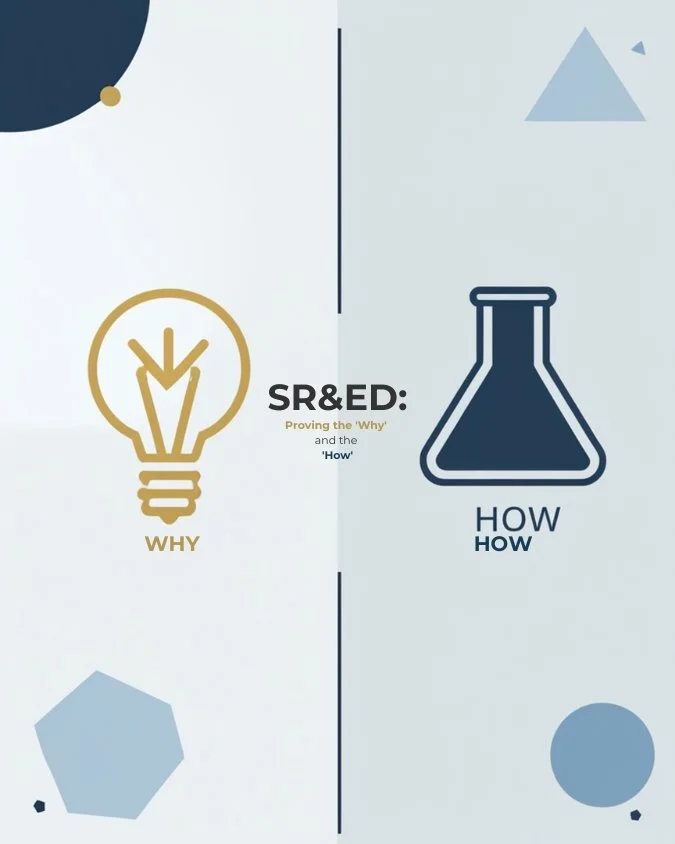
The "Why" requirement is about advancing scientific knowledge or acheiving technological advancement. The key is the generation or discovery of knowledge that advances the understanding of science or technology. New scientific or technological knowledge is needed if there is a technological uncertainty. Technological uncertainty exists when it is uncertain whether a result or objective can be acheived due to insufficient available or technological knowledge.
Secondly, the "How" requirement is that the work must be a systematic investigation or search carried out in a field of science or technology by means of experiment or analysis. This follows a typical flow: idea / hypothesis, testing through experimentation or analysis (iterative),and developing logical conclusions.
The CRA needs proof that the work you’re claiming:
Is related to addressing a technological uncertainty (“Why?”)
Used a systematic approach to resolve it (“How?”)
Most software documentation shows neither clearly.
SR&ED Eligibility: Proving Technological Uncertainty and Advancement
The "Why" requirement is about advancing scientific knowledge or acheiving technological advancement. The key is the generation or discovery of knowledge that advances the understanding of science or technology. New scientific or technological knowledge is needed if there is a technological uncertainty. Technological uncertainty exists when it is uncertain whether a result or objective can be acheived due to insufficient available or technological knowledge.
SR&ED Documentation Requirements: Showing a Systematic Experimentation Process
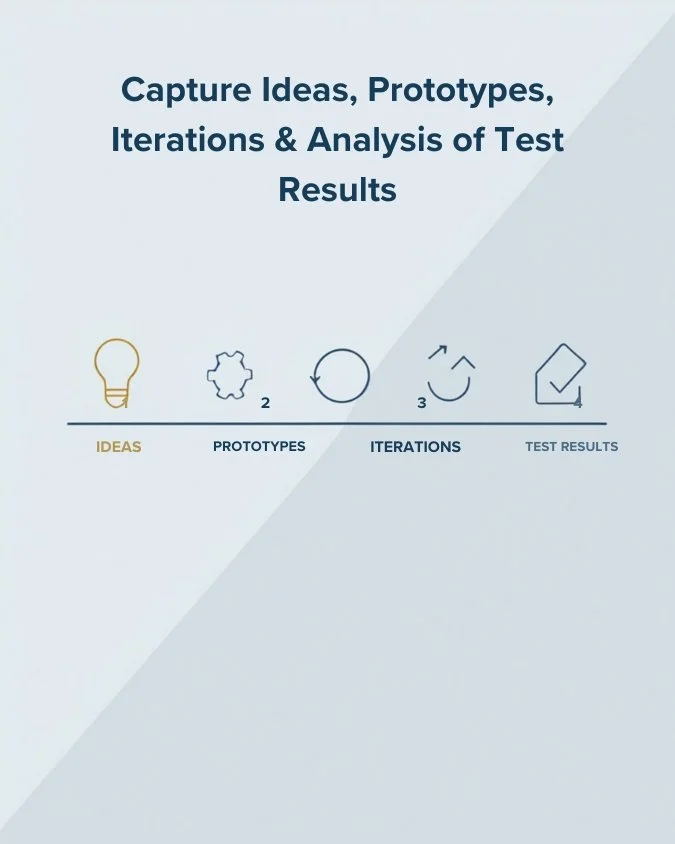
Secondly, the "How" requirement is that the work must be a systematic investigation or search carried out in a field of science or technology by means of experiment or analysis. This follows a typical flow: idea / hypothesis, testing through experimentation or analysis (iterative),and developing logical conclusions.
Examples of Strong SR&ED Documentation for Software Development
To generate defensible evidence, teams must document two things in addition to standard development artifacts:
1. Document the Limits of Standard Practice for SR&ED
Before solving a new problem, engineers do their homework:
Libraries investigated
Algorithms evaluated
Benchmarks or papers reviewed
Third-party tools tested
After you've conducted your search for existing solutions but realize that they come up short, document it. What white papers, third party technologies, etc. did you review and what were the shortcomings of each. Documenting the limitations of why they couldn't be applied in this case is key to demonstrating technological uncertainty.
2. Capture Ideas, Iterations, Prototypes, and Analysis of Test Results for SR&ED
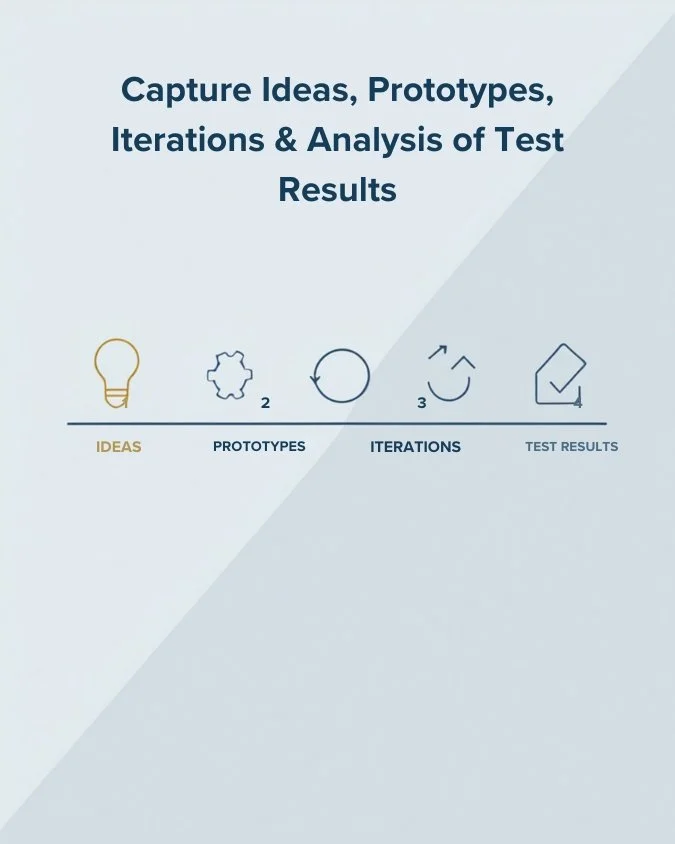
Next, during development capture the details of the major iterations. Don't just complete work and check in tickets marked as "done". The CRA needs to see details on the iterations:
What ideas/hypotheses did the team come up with?
What prototypes were developed in order to try out the ideas?
What did the results of the tests show?
Capture specific iterations with specific test results so that that the work followed a systematic process.
A Simple, Low-Effort Process for Improving SR&ED Documentation
Most teams don’t have time to create new documentation workflows. The solution isn’t more admin. It’s structured capture and translation.
Here’s how Elevyn makes it painless:
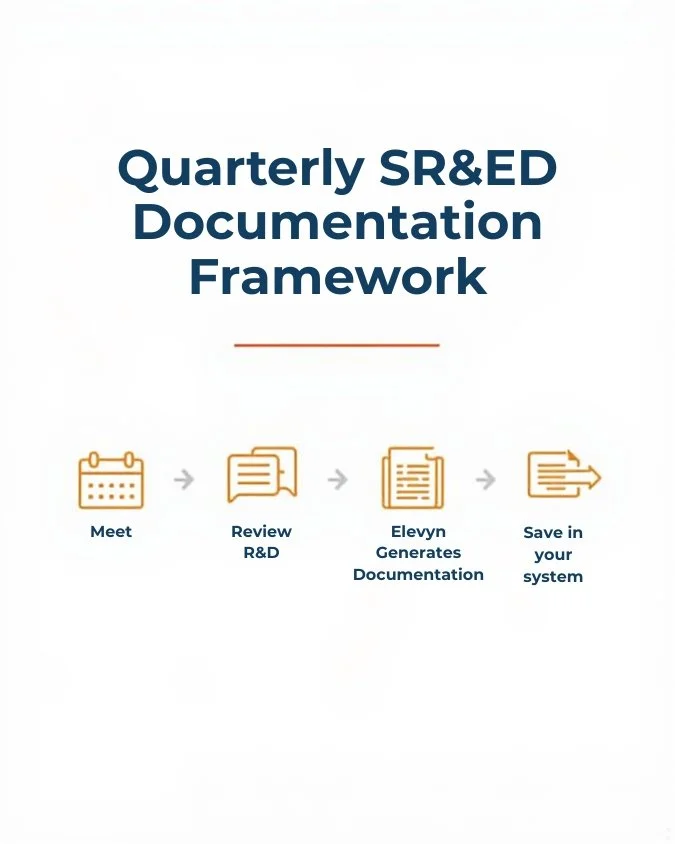
Meet with your development team once per quarter (one hour)
Review the projects tackled, challenges faced, and iterations explored
Discuss the research done for existing solutions and limitations of standard practice
We translate this into contemporaneous SR&ED documentation
You store it in your existing systems (Confluence, Notion, Google Drive)
In short: your engineers build, we document.
Benefits of Proper SR&ED Documentation for Software Teams
Stronger and more defensible claims
Less developer time wasted reconstructing history
No scrambling at year-end
I’ve made this easy for clients on thousands of SR&ED claims.
Let’s talk
If you want to simplify documentation while maximizing your SR&ED return, let’s discuss how I can help your team build better evidence with less effort.
